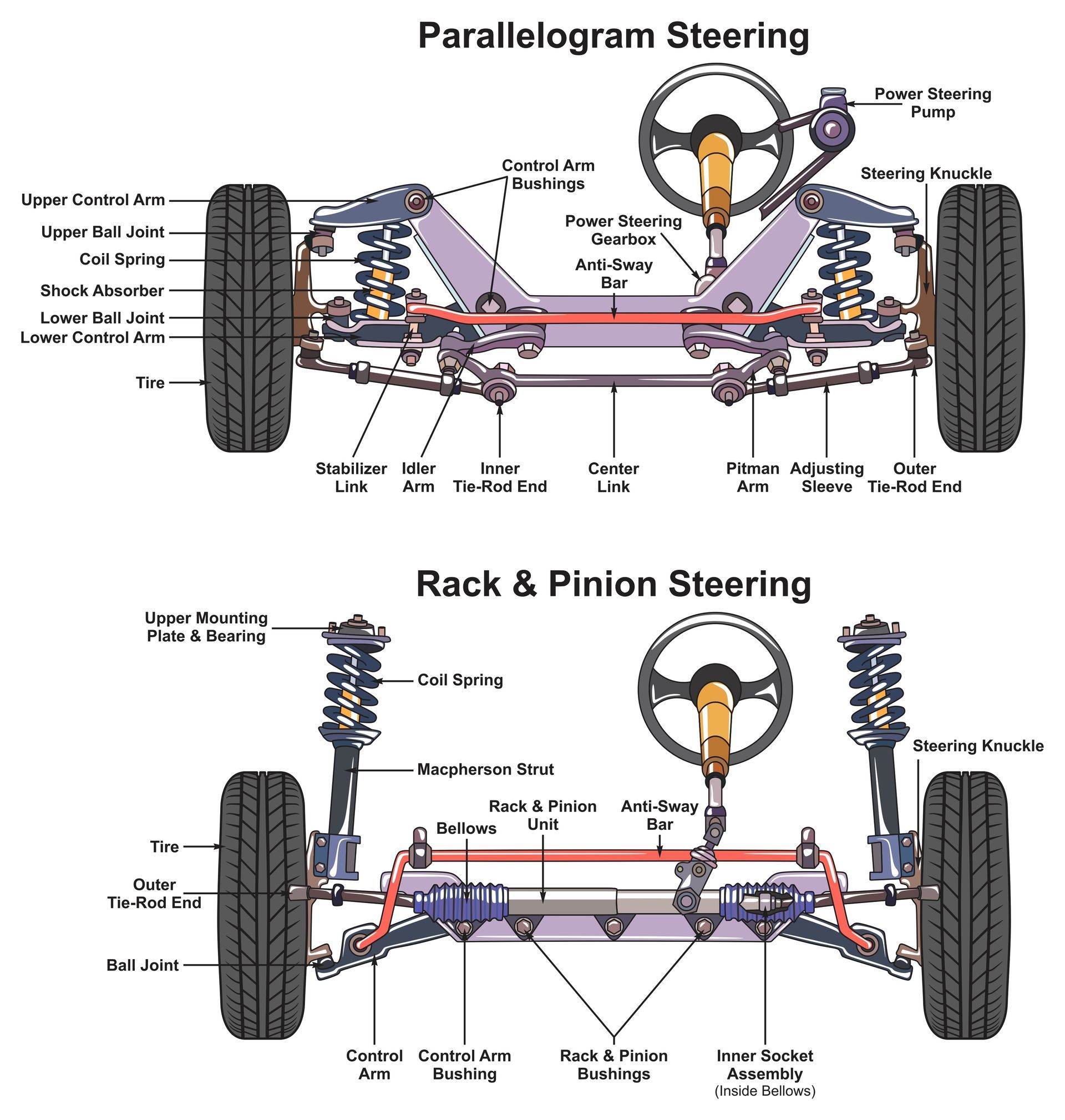
Tires can only do their job when they stay planted on the road. That sounds simple, but the parts that make it happen are constantly at work. Shocks, struts, control arms, bushings, ball joints, tie rods, wheel bearings, and springs all help keep the tire steady while the vehicle brakes, turns, hits bumps, and carries weight.
When suspension parts wear out, the tire may still be touching the road, but not with the control it should have. It may bounce, chatter, lean, drag across the pavement, or lose steady pressure in certain moments. That affects tire wear, braking, steering, ride comfort, and how confident the vehicle feels during everyday driving.
1. The Tires Start Wearing In Strange Patterns
Uneven tire wear is one of the clearest signs that the suspension is no longer controlling the tire correctly. A tire should wear fairly evenly across the tread when alignment, pressure, and suspension parts are in good condition. When something is worn or loose, the tire may start showing cupping, feathering, inner-edge wear, outer-edge wear, or rough patches.
Cupping is especially common when shocks or struts are weak. The tire bounces slightly as it rolls, creating high and low spots around the tread. Drivers may hear a humming or roaring noise and think they have bad tires when the tire damage actually started because the suspension was not holding the tire steady.
Replacing the tires without checking the suspension can lead to the same wear pattern coming back. The new tires may feel better for a while, but if the worn part is still there, the road will start carving the same story into the tread.
2. The Vehicle Bounces After A Bump
A vehicle should move over a bump and then settle. It should not keep bouncing like the road is still underneath it. Shocks and struts control spring movement, so when they wear out, the body of the vehicle can keep moving after the bump is already gone.
That extra bouncing changes tire contact. Each time the tire unloads, even slightly, grip becomes less consistent. On dry pavement, it may only feel annoying. On wet roads, during a quick stop, or while turning, that loss of control can become more noticeable.
The old bounce test in the driveway can sometimes show a weak suspension, but it does not tell the whole story. A road test and inspection are better because some worn struts only feel bad at certain speeds or over certain types of pavement.
3. The Front End Dives When You Brake
When you brake, the vehicle’s weight shifts forward. Some movement is normal. Too much nose dive can mean the front shocks, struts, or suspension parts are no longer controlling that weight transfer well.
Excessive front-end dive can affect stopping feel. The front tires are asked to carry more load, the rear tires feel lighter, and the vehicle may feel less stable during a hard stop. If the road is uneven, worn suspension can cause the tires to bounce or skip slightly as the brakes try to slow everything down.
A driver may describe this as a soft front end, a low dipping feeling, or the vehicle rocking after a stop. Brake parts may still be working, but worn suspension can make the whole stop feel less controlled.
4. The Steering Feels Loose Or Nervous
The steering feel depends on more than the steering wheel. Tie rods, ball joints, control arm bushings, struts, mounts, and tires all affect how the vehicle responds. When those parts wear, the tires may not point or stay planted as they should.
The vehicle may wander on the highway, need constant small corrections, feel delayed during lane changes, or react oddly over bumps. In some cases, the steering wheel may sit slightly off-center because the alignment angles have changed as parts loosen or settle.
This is where drivers sometimes get used to the problem. They adjust without realizing how much they are correcting the vehicle. Then they drive a car with tight suspension and immediately notice the difference.
5. The Tire Loses Contact Over Rough Pavement
Rough pavement exposes weak suspension quickly. A healthy suspension keeps the tire following the road surface as closely as possible. Worn shocks, struts, or bushings allow more uncontrolled movement, so the tire can feel like it is skipping, hopping, or slapping over broken pavement.
That can affect braking and cornering. If the tire is not maintaining steady contact, the vehicle has less grip available when you may need it. This is why suspension wear is not only about comfort. It changes how well the tire can do its job.
You may notice the vehicle feels unsettled over railroad tracks, potholes, uneven lanes, or patched roads. The more the vehicle moves around underneath you, the more the tires are struggling to stay firmly planted.
Why Tire Contact Matters For Safety
The tire’s contact patch is small, but it carries every braking, steering, and acceleration command. Worn suspension parts make that contact less stable. That can lead to longer stops, poor wet-road control, uneven tire wear, vibration, and a less predictable ride.
A good inspection should check the tires and suspension together. Tire tread can show clues about shocks, struts, alignment, pressure, and worn steering parts. Suspension movement can explain why tires are wearing faster than expected. One system tells on the other.
Regular maintenance helps catch worn shocks, struts, bushings, ball joints, tie rods, and alignment concerns before the tires are ruined. Once tread is damaged, the tire may stay noisy or uneven even after the suspension is repaired.
Get Suspension And Tire Service In Marietta, Kennesaw, And Woodstock, GA, With D.W. Campbell Tire & Service
If your vehicle bounces, dives when braking, wanders, wears tires unevenly, or feels unstable over rough roads, D.W. Campbell Tire & Service in Marietta, Kennesaw, and Woodstock, GA, can check the shocks, struts, suspension parts, alignment, and tires.
For suspension and tire service that helps keep your tires in better contact with the road,
contact us to schedule an appointment.