A water pump failure rarely feels like a big event at first. Most of the time, it starts as a tiny seep, a faint noise, or a temperature gauge that does something slightly odd, then behaves again. The problem is that the water pump is the heartbeat of the cooling system. If it can’t move coolant consistently, heat builds fast, and engines do not handle overheating gracefully.
Catching the early warnings can be the difference between a planned repair and an ugly tow.
Why Water Pump Trouble Can Be Hard To Spot Early
The cooling system is pressurized, and many small leaks only show up when the engine is hot and the pump is working hard. If the leak lands on a hot surface, it can evaporate before it ever forms a puddle. On top of that, the temperature gauge is not a precision tool. It can sit in the normal range right up until the moment things go past normal.
We’ve also seen drivers chase the wrong suspect because the symptoms overlap with hoses, the radiator, the thermostat, and even the cooling fan. That’s why patterns matter. The same clue showing up twice is usually not a coincidence.
1. Coolant Loss That Keeps Coming Back
If you top off coolant and the level drops again, you have a leak somewhere. A water pump can leak from its seal, the gasket surface, or a small vent hole designed to show early seal failure. The tricky part is that the loss might be slow enough that you only notice it every week or two.
Watch for a repeating pattern: the reservoir is low, you add a little, then it’s low again after a few drives. Even if the car is not overheating, steady coolant loss is still a big deal because the system needs the right level to prevent hot spots and air pockets.
2. Temperature Swings Or Running Hot Under Load
A failing pump does not always cause constant overheating. Sometimes it struggles only when demand is higher, like climbing a grade, sitting in traffic on a hot day, or running the air conditioning while idling. You might notice the temperature creeping up, then dropping when you get moving again.
Another clue is heat that feels inconsistent. If the cabin heater suddenly blows cooler at idle, then warms up again when you rev the engine slightly, coolant flow can be part of the story. That does not prove the pump is the culprit, but it’s a strong hint that flow is not as steady as it should be.
3. Whining Or Grinding From The Front Of The Engine
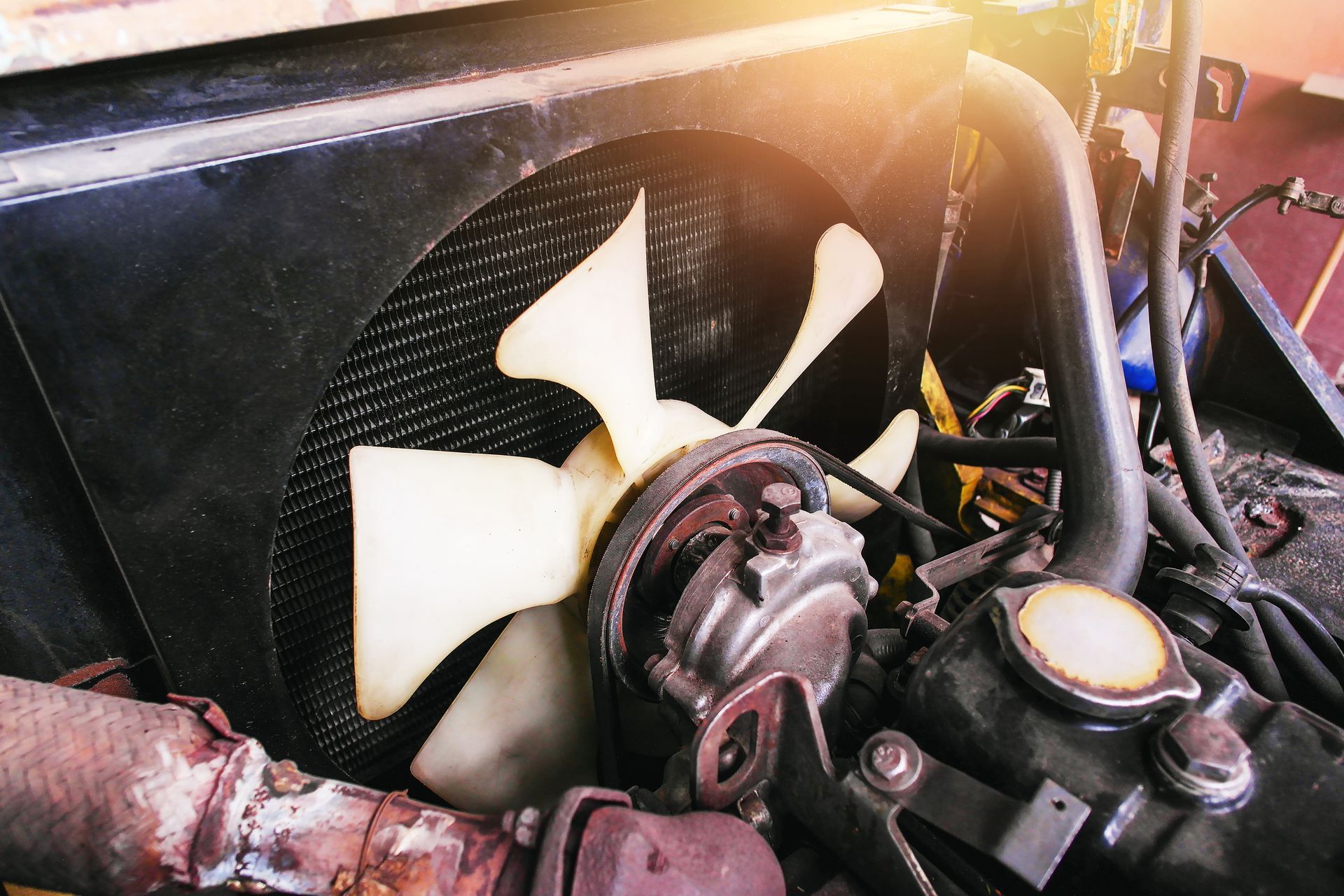
Water pumps spin on a bearing, and when that bearing wears, it can make noise. Drivers often describe it as a whine, a rough grinding sound, or a growl that changes with engine speed. It can be easy to confuse it with a belt noise, an idler pulley, or an alternator bearing, because those parts live in the same area.
A key detail is whether the sound is new and whether it changes smoothly with RPM. If it suddenly shows up and you can hear it best with the hood open near the front of the engine, it’s worth checking sooner rather than later. When a pump bearing gets bad enough, it can start wobbling, which accelerates seal failure and makes a leak more likely.
4. Drips Or Crust Near The Pump Area
Sometimes the most obvious clue is visual. Dried coolant residue can look white, pink, or green depending on what’s in the system. You may see crust near the pump housing, around a gasket seam, or on nearby components where coolant has been thrown by the belt.
If you see drips under the front of the engine bay after parking, don’t assume it’s just condensation. Coolant has a slightly sweet smell and often leaves a slick feel. When we inspect cooling system leaks, we look for both fresh wet spots and dried trails, because dried trails show where the leak has been traveling even when it is not actively dripping.
Mistakes That Turn A Small Leak Into A Bigger Repair
The biggest mistake is treating repeat top-offs as normal. A sealed cooling system should not need routine refills, so if you’re adding coolant more than once, you’re already in leak territory. Another mistake is mixing coolant types. That can reduce corrosion protection and sometimes create deposits that complicate the problem.
The other common one is continuing to drive when the temperature starts climbing. Even one true overheat can warp components and create a chain of problems that cost far more than the original repair. If the gauge rises above normal or you see an overheat warning, the safest move is to pull over and shut it down as soon as you can do so safely.
Get Water Pump Service In Marietta, Kennesaw & Woodstock, GA With D.W. Campbell Tire & Service
If you’re losing coolant, hearing a new front-of-engine whine, or noticing temperature changes you didn’t have before, it’s worth checking the water pump and the rest of the cooling system before overheating becomes the next chapter. We can inspect for leaks, verify coolant flow concerns, and recommend the right repair based on what we find.
Set up a visit with
D.W. Campbell Tire & Service, and we’ll help you keep the engine running cool and steady.