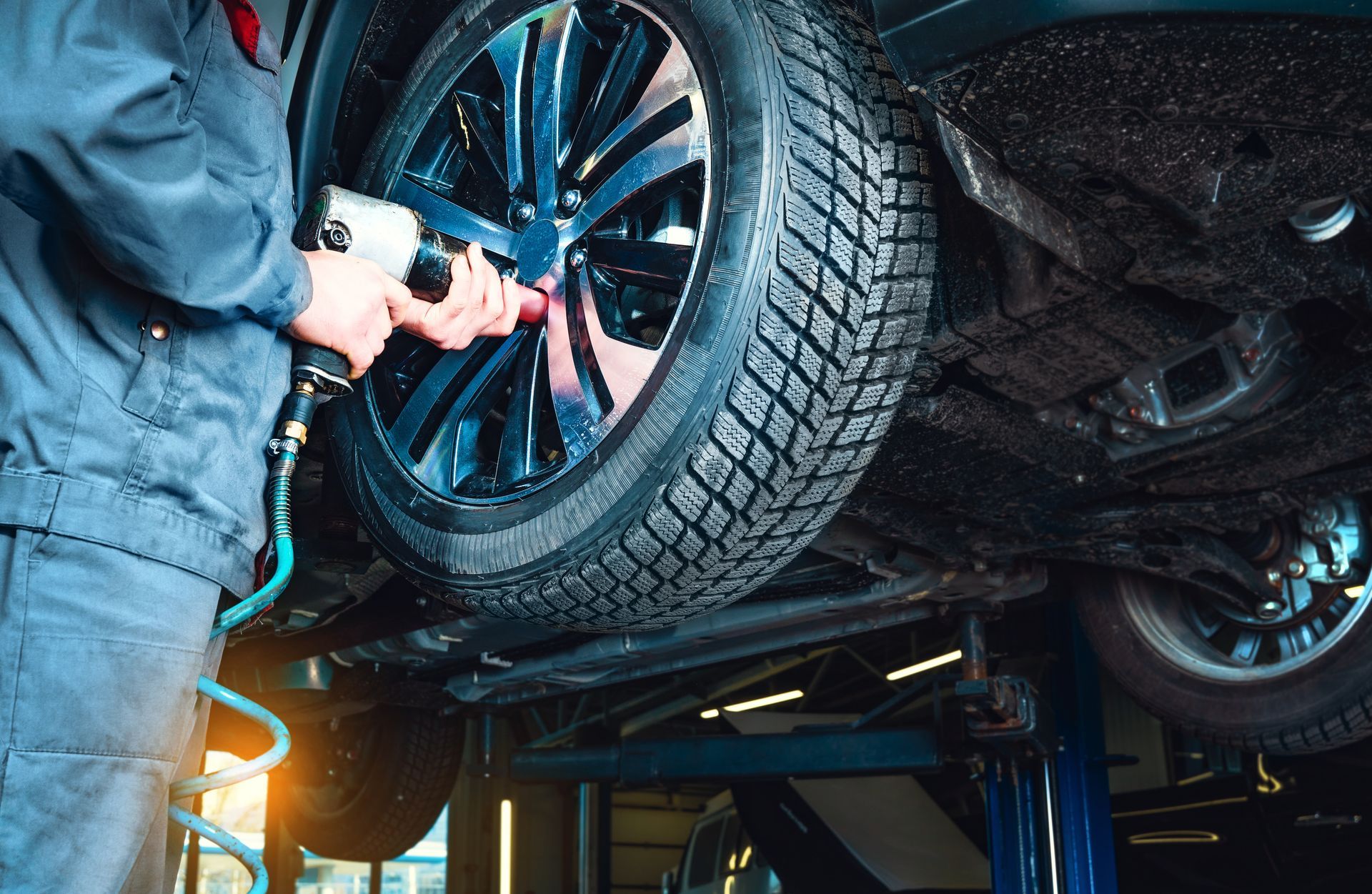
You fill your tires on Monday, and by the weekend, one is low again. There is no nail in sight, and the driveway is clean. Slow pressure loss without an obvious puncture is common, and it typically results from temperature fluctuations, minor leaks at the valve or bead, or corrosion at the point where the tire meets the wheel.
Knowing the likely causes helps you decide what to check at home and when to visit a tire shop for a permanent fix.
Cold Weather and Daily Temperature Swings
Tire pressure changes with temperature. For every 10 degrees Fahrenheit drop, pressure falls about one psi. A cool morning in the 40s followed by a sunny afternoon can make your pressures look low at breakfast and normal at lunch. That is not a leak by itself, but it can hide a small one. Always set pressures first thing in the morning when the tires are cold and the car has been parked for several hours.
Bead Leaks Where Rubber Meets the Rim
The bead is the thick inner edge of the tire that seals against the wheel. If the wheel has a light bend from a pothole or corrosion from road salt and age, tiny gaps let air escape slowly. You may hear a faint hiss only when the tire is flexed or after a car wash. We can dismount the tire, clean the bead and rim with a wire brush, apply a sealing compound, and reseat it. If the wheel is cracked or severely bent, repair or replacement is the safe move.
Valve Cores, Valve Stems, and Caps
Valve cores are small, spring-loaded inserts that seal air inside the stem. A slightly loose or worn core leaks just enough to drop a psi or two each week. Rubber valve stems also age and can develop hairline cracks near the base. If your car uses a TPMS sensor as the valve stem, corrosion on the aluminum base can cause a slow leak. Replacing a valve core is simple, but TPMS stems require the correct service kit with new seals to avoid damage.
Porosity and Sidewall Seepage on Older Tires
Tire rubber dries and hardens over time. Very old tires can weep air directly through the sidewall or shoulder area, even with no puncture. You might notice a uniform drop across several weeks with no bubbles found at the tread. If the date code shows the tire is nearing the end of its service life, replacement is the best answer for safety and reliability.
Punctures That Hide in Plain Sight
Small screws, staples, or shards can sit flush in the tread and escape a quick look. The leak may only show when the tire flexes during a drive. A proper inspection off the car will include a water tank or a careful soapy water test across the entire tread and shoulder. If a puncture is in the repairable zone and the hole is clean, the correct repair is a patch plug from the inside, which seals both the casing and the path through the tread.
Cracked Wheels and Welded Repairs
Hairline cracks in alloy wheels often hide on the inner barrel, where you cannot see them without removing the tire. They tend to open as the wheel warms up or when you hit a bump, which explains why pressure loss feels inconsistent. Professional wheel repair can fix some cracks, although severe damage calls for replacement to preserve safety at highway speeds.
Driving Habits and the Underinflation Spiral
A tire that starts a little low runs hotter. Heat softens rubber and can make a small leak worse. It also encourages bead movement over rough potholes, which can open gaps on rims with minor bends. Running significantly underinflated stresses the sidewall and may cause internal damage that leads to chronic pressure loss even after a repair. Keeping pressures on target prevents this spiral.
Simple Checks You Can Try at Home
Measure the pressures while the tires are still cold with a reliable gauge and note the numbers.
Spray soapy water on the valve stem, around the bead near the rim, and across the tread. Watch for tiny bubbles.
Wiggle the valve stem gently. Movement or visible cracking is a clue.
Inspect the wheel lip for curb rash, bends, or a flaking finish that may indicate corrosion.
Rotate the tire slowly and look for small dark spots or shiny metal in the tread that could be a hidden fastener.
These notes help a technician go straight to the source.
Why TPMS Lights Come and Go
Your tire pressure monitoring system watches relative drops, not just absolute pressure. A cool morning or a small leak can trigger the light, then a warm freeway run may turn it off. If the light cycles repeatedly, one tire is drifting faster than the rest. That is your cue to check pressures with a gauge and book an inspection, even if the light goes out later.
What a Professional Tire Shop Will Do
A thorough visit includes removing the tire, testing in a water tank, and inspecting the wheel barrel and bead. The technician will service or replace valve cores, install the correct TPMS seal kit if equipped, clean and reseal the bead, or recommend a wheel repair if needed. For punctures, a proper patch plug from the inside restores airtight integrity. The final step is setting all four pressures to the door label specification and verifying that TPMS reads correctly.
Keep Tires Sealed and Steady with D.W. Campbell Tire & Service
If a tire keeps losing air with no obvious nail in sight, we can help. Our team pinpoints slow leaks, services TPMS valves, cleans and reseals beads, repairs wheels and punctures the right way, and resets pressures so your car tracks straight and your tires wear evenly.
Visit D.W. Campbell Tire & Service in Marietta, Kennesaw, or Woodstock, Georgia, and we will stop the slow leak, protect your tread, and keep you rolling with confidence.
Cobb Pkwy
1930 Cobb Parkway Southeast, Marietta, Georgia 30060
Powers Ferry
1291 Powers Ferry Road Southeast, Marietta, Georgia 30067
Professional Way
1906 Professional Parkway, Woodstock, Georgia 30188
Busbee Pkwy
2970 George Busbee Parkway Northwest, Kennesaw, Georgia 30144
Canton Rd
3330 Canton Road, Marietta, Georgia 30066